

Mobility for Vesicles Research in Europe Grant awardees
MOVE awardees
In the spotlight
Experience of the first MOVE awardee: Simon van de Wakker
1. What was the goal of the MOVE exchange visit?
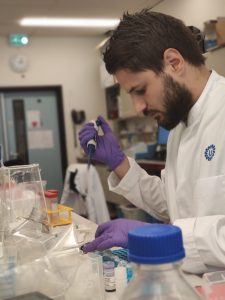
I visited the Karolinska Institute in Stockholm to enhance my scientific knowledge and develop my technical skills by working in a laboratory abroad. The goal of my visit was to gain expertise in single EV analysis using the imaging flow cytometry technique and apply this knowledge to advance my research.
2. How did the MOVE initiative help you enlarging your professional network?
Thanks to the MOVE grant, I had the opportunity to cover a portion of my personal expenses and visit Professor Samir El Andaloussi’s research group to collaborate with Doctor André Görgens. Samir has a large research group with a lot of experience in the study of EVs, which allowed me to expand my professional network in the field and engage in discussions about various projects.
3. How did MOVE help you improve your knowledge and develop your technical skills?
The main goal of the visit to the Karolinska Institute was to gain expertise in imaging flow cytometry to conduct single EV measurements. Specifically, I chose this lab because of André Görgens’ extensive expertise in this technique. During my stay, I received training in using imaging flow cytometry. By utilizing this technique, I was able to investigate the distribution of specific EV protein markers, advancing our understanding of EV heterogeneity. The financial support of the MOVE grant gave me the chance to travel to a country with a high cost of living. Without financial support this visit would have been difficult to arrange.
4. Did your MOVE grant lead to additional collaborations with the hosting or other research group on EVs?
My time at the Karolinska Institute exposed me to diverse EV research projects and introduced me to multiple knowledgeable researchers. I am still working together with André and Samir on multiple collaborative projects and additionally I still maintain contact with various other researchers in their group. My time abroad broadened my perspective of the EV field and opened up new opportunities for future research collaborations.